A Pill For Anything

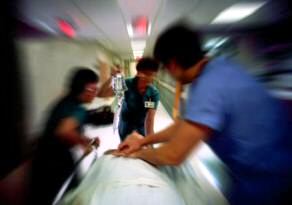
I recently completed my mandatory rotation in the McKennan ER, where I usually volunteer, during which time I had the chance to sit down with patients in a different way than I usually do. One of the patients I got to talk to was a 22 year old guy, who had come in for a diffuse set of symptoms, including a headache and stomach pain. What I got to talking to him about, though, had little to do with his current ailments, and more to do with the kind of society we have become.
The guy, let's call him David, told me while waiting for the doctors to finish up their array of tests, that he'd been struggling with a general feeling of depression and unexplained sadness for the past 3 years. He had had a pretty normal childhood and adolescence, and even though his parents were divorced, he was mostly well adjusted in his various social contexts. When consulting his physician about the depression, there were no probing questions on what might have contributed to the mood disorder, what could have sparked the feelings, or any advice to try exercise or counseling. After the 10 minute consultation, David was prescribed 100 mg of Zoloft (an antidepressant) to take daily, which he had done every day since.
David told me he felt much better the very next hour after taking these new pills, and all of a sudden had a much brighter outlook on life. Gone were the feelings of sadness and anxiety, depression and irritation, and in their place a new, happier David was finally getting stuff done. He felt like a new person, and things that would usually have gotten him worried or sad would now bounce off him like a cat on a hot tin roof. He would smile for no reason, instead of cry for no reason, and could not help but to enjoy the medication he was now reliant on to function adequately.

This gave me a few things to think about, a few things to ponder if you will. The first part is the obvious one, whether or not doctors are doing too little to actually
treat their patients with psychological afflictions. I think they absolutely are, and I think that the way pills are being pushed so naturally as the 'magic' solution to all our problems nowadays is borderline disgusting, and all the way saddening. The lack of appreciation for the complexity of our minds, beyond the basic and chemical, seems all too prevalent, and the easy way out of solving problems in this intricate cognitive organ we know as our brain. It is very true that the symptom of depression (or the symptom causing depression) is due to a chemical imbalance in the brain, but thanks to growing patient lists and increased time pressure docs usually don't have the time to dig much deeper than this. They opt for the easy way out, the quick fix, and parcel out pill after pill as if they were fantastic Tic-Tacs.
The solution to this problem (since I'm trying hard to be solution and not problem oriented here) is simple. Doctors don't necessarily need to spend more time with their patients, for that this health care system is too skewed and would just push those doctors out of business (because, sadly, people's health has become big business like nothing else). What physicians have forgotten is their primary responsibility to
treat, and not simply
mask, the patients' conditions. In 2006, an estimated
227 million antidepressant prescriptions were given out to Americans, more than any other class of meds around. This is a sign of our sad (but not antidepressant worthy) times, where pills have taken the place of psychotherapy and lifestyle changes, and where millions of Americans rely on a pharmaceutical crutch to get them through a normal day. If doctors aren't demanded to try healthier, more far-reaching and definite treatment options before throwing pills at it, and we just open our mouths and say "ah," nothing will change and we will keep hoping that what's ultimately hiding at the bottom of that pill jar is true happiness.
That brings me to the next question on my mind about David's and everyone else's story. Are our emotions really nothing more than chemicals sent over synapses in the brain? Are we defined by our serotonin? Is it really possible to change our entire view of the world by digesting a single, white pill? The last question has a verifiable answer, being yes, which would be very evident just considering how the industry of illegal drugs (think Ecstasy or Meth) is banking on this very fact. When considering the others, I am not that sure. I won't - in fact, I refuse - to believe that concepts such as love are purely due to any amount of chemicals in our brains, or that the very essence of our character and being, our soul, can be expressed in any empirical formula.
Pills with the power to alter our moods are in many ways eerie to me. They alter our moods - but do they then also in turn alter our identity, our personality, who we are? Is some little, or big, piece of us lost when we block it out with medications? I am not sure, but I definitely see that possibility. No, we shouldn't live in a sad, depressed world every day if we don't have to. But does the alteration of how we think, how we act, also in turn impact who we are as human beings? That is a heavy price to pay if that is the case, for a day of happiness.
Yeah, pills can tweak - and in some cases completely alter - our moods and mood swings for the better. I appreciate that, and think it's great that people with irremediable psychological afflictions not helped by therapy or other methods have a final, sure-fire resort. That's just it, though, it has to be the last tried alternative. Pills help us feel better for about a day, but without the pills the problems would resurface immediately. Medicine has not traditionally been about quick fixes or shortcuts, but our 'fast' food and 'fast' results driven society has regrettably been allowed to spill over into health care - fielding the advent of 'magic' pills. We're forgetting that an absence of sadness rarely constitutes happiness, which would rather come from digging deeper and resolving the actual, underlying issues. It takes time, yes, but we've got time. Especially when it comes to our own psyche.
Labels: Medical, Ponderings, Rants
Assuming Room Temperature
I am now well into my intensive one month certification, on the way to becoming an EMT. Yes, the class is 7 hours every day, and you're supposed to remember a million little sequences of interventions that you would perform depending on what the patient's chief complaint is. Fair enough, we are dealing with saving lives here, so some details are permissible. What I always knew, but never had any detailed personal knowledge of, is that in addition to this (or perhaps in spite of, or even thanks to) the sometimes serious and grim nature of the job, EMTs have developed their own twisted sense of reality and humor. And that's what I'll be talking about today.
EMTs are all action-loving adrenaline junkies, to some extent, so the first thing I encountered in our paramedic instructor was an inherent love for gory and graphic video clips. We'll either start the class off with one of these, or end it with one, and they all fall in 3 categories: funny, car accident related, or they're clips from Family Guy. To show you exactly what I mean, these are samples of what we watch in class every day:
Family Guy ClipFatal Car Chase, Guy Thrown OutTequila Commercial5 stages of GriefAnother category, that we really haven't seen that many clips of, has been the gory kind.. the kind of thing where there's blood or brain matter everywhere, as in whenever someone films a car accident scene or suicide, or just some trauma case where paramedics and EMTs are working on someone critically injured. I love the latter kind, but the suicides and other gore from real life I can do without. (For a special treat to those who love that stuff, here is a clip of a guy who is brought in to the police station after shooting a cop - who was never searched properly - and who then shoots himself right there.
WARNING: Graphic!).
EMTs must learn and use a bunch of acronyms to remember the stuff to do to a patient in different situations, since the assessment needs to be thorough and complete, and in the right order. An example is the SAMPLE history, which is a list of questions to ask a patient or relevant family members about the medical history.
S - Signs and Symptoms.
A - Allergies.
M - Medications.
P - Pertinent Past History.
L - Last Oral Intake
E - Events leading up to illness/injury.
As you can see, this can be a great tool for figuring out what is wrong with the patient, what's causing this, and what might be done by the EMT to help the patient. A different area where an EMT utilizes a lot of acronyms, though, even though it's a no-no, is in the description of the patient to each other or in their reports. A typical example is the trauma patient description FDGB, which means "Fall Down, Go Boom." Some larger patients might have BWS (Beached Whale Syndrome), and the homeless might be referred to as "urban outdoorsmen." A terminal patient might be FTD (Fixin' To Die) or CTD (Circling The Drain), and a dead patient might be ART (Assuming Room Temperature) or CC (Cancel Christmas). Gunshot wounds to the head are sometimes referred to as either 'trans-occipital implants', or simply 'acute lead poisoning' in other cases. Most people are familiar with FUBAR (Fucked Up Beyond All Recognition) patients, in which case it might be necessary to PUHA (Pick Up, Haul Ass). An IBM (Incredible Barfing Man) should probably GOMA (Get Outta My Ambulance), as he might be PD (Pretty Drunk) and a PITA (Pain In The Ass). Either way, it's always important to for EMT to CYA (Cover Your Ass).
As I have 1 online exam, 2 quizzes and 6 chapters of problems to do before tomorrow, I should probably end it there.. but hey, this is an interesting tidbit to all Europeans: Did you know that medical professionals here (from EMTs to doctors) do NOT have to stop and help at the scene of an accident or illness unless they are actually on shift? Pretty crazy to me.
Labels: College Stuff, Medical
My First Kicked Bucket
So, we all know I work in a hospital, and maybe even that I work in the Cardiac ICU (read: heart attack central, Capital of Angina, the Ground Zero of Cardiomyopathy, or the ER's little brother). It's a reasonably stressful place to work at times, when people are on vacation and I'm left with 4 paralyzed or
hemiparetic patients to care for in most imaginable ways (that is, the basic bodily functions tend to be my area of responsibility; eating, drinking, washing, defecating, urinating, exercising, plus controlling all their vitals). Even though we see our fair share of pretty critical patients, action and drama like what's seen in TV's "ER" is rarely on the menu. Yesterday, though, my medical horizon was broadened thanks to the nature of my workplace. Yesterday I met my first dead body.
Patient X was alive and well in the morning, experiencing some blunt feeling pressure and pain in his chest and left shoulder. He was 92 years old, tall and fit. Yet, without knowing it, his number was up and he was only hours away from that final farewell. Patient X felt okay considering the circumstances when arriving in the ER, so after receiving some oxygen and nitroglycerin (yay for nitro, the quick-fix), and some other vital drugs, he was wheeled up to the 3rd floor and my department, the Cardiac ICU. He was suddenly feeling dizzy and tired, and was wheeled into one of the emergency rooms. Once inside the door, the big one struck: a clot loosened off of one of his arteries, got stuck in one of the heart's own arteries, and blocked half the heart's blood flow. Patient X had coded, and before anyone could do anything, he was gone.
Considering the patient's age (92), the previous story might not have been that surprising (we all have to die from something at one point). I did, though, see the possibility of a learning experience, and volunteered to help prep the old man for his next stop (zee eerie cooler). I never actually saw the man while he was alive, but now I felt there was something to be learned from his death. The first thing that met me when I entered the emergency room where he'd been (technically his body was still there, but of course religion will explain why I don't believe he was), was the lone bed in the middle of the room, with a male body covered to his chest by a blanket in it. He was pale, very pale, and his eyes were closed. Weird thing was, as I was standing there, alone, I kept thinking this was when he'd quickly open his eyes and start screaming or moving. But, of course, that never happened. The seriousness of his situation (the whole deadness thing) really hit me when I focused on his chest, which wasn't moving or expanding. There was no visible pulse on his neck, no blinking or trembling of the eyelids, and no sound whatsoever. No breathing, no coughing, sighing, or laughing. Nothing. Just a lifeless, cold, pale body in a bed. Maybe it was the fact that I'd never seen the man alive that made it so hard to connect the shape in the bed to an actual human being, because after a while it started reminding me of those plastic
ResusciAnn manikins that we use for practicing CPR, and that made it increasingly hard for me to feel anything about the soul's former vessel in the bed.
Patient X was probably a remarkable human being, a remarkable man. We all are, in some way. Knowing what TV-shows he liked and what his hobbies were would probably have added the necessary emotion to the event of his passing for me, but I think my relationship to the dead body would have remained the same. The instant we draw our last breath on this planet, our inherent union separates through a process best described as the mother of all schizophrenic episodes, leaving the water and carbon based bag of bones behind. For the few days after a death the body might serve a function as the relatives' anchor point to the person on this earth, but after this it is ultimately (and cruelly, considering how many acts of love and kindness have been conveyed through this medium) returned to the soil to start a new cycle of living things. But there is no soul in the soil. This, the actual life of our liveliness, has long since parted ways and is now comfortably finding its place above the clouds. A body is therefore just a body; no person, no life, and no personality can be found within the body's confines after its contract has been terminated. And I know you agree with me on some level, no matter what religion you belong to.
There is no soul in your salami, right?
Labels: Medical, Philosophy, Ponderings, Religion, Work
I Think, Therefore I Am (Rambling)
See? I keep my promises! I told you I would post something every single day for a month, and this is the second one…! I never lie (which is, by default, a lie, but nonetheless). Here goes.. hm, a slice of bread? Never mind.
I actually went to school today. Believe it or not. Me, the guy who's been having issues (multiple, I tell you) for a month now, preventing me from attending the crucial med lectures I always forget I love. First, there was the issue of being thrown out of my house, a topic which I'll surely revisit one of these days, and then, of course, there was the magic of Alicia's visit and the subsequent delightfully distracted mind. But the point is, as I'm getting to, that I indeed did go to school today, and I actually did so after staying up all -ALL- night and day before this. And I discovered that, after the sleep deprivation had made itself known and the drunk phase (yes, there is
such a thing) had worn off, I actually felt more imaginative and lucid than before. During this.. let's call it Awareness phase, I did in fact make a few fascinating observations (and a few that questions my theory of a heightened awareness), that I will outline for you here.
- The smell of freshly grilled chicken is amazing, and I could probably donate an appendage (take a finger, please, or better yet, the appendix) to have some if I was isolated from this delicious bird for any amount of time.
- Walking around fast, in scrubs, just looking serious and like you're rushing to get somewhere important, is the coolest thing ever. (btw, I used to do that when getting lunch in the hospital cafeteria in Sioux Falls. People stopped and just gazed admiringly as I rushed past, hahaha..)
- A new nickname could very easily be born whenever I become a doctor. Seeing as my blood is almost pure diet Pepsi, or Pepsi Max as Norwegians call it, some coworker should mention "Mr. Pepsi Max is coming" or something, one day. And that's when I will reply "Hey! That'll be Dr. Max to you!" and thus a new nickname will be born. Dr. Max, how cool is that?
- When I don't sleep, my mind makes up connections in my head that sounds good at the time, but that any sane person would immediately dismiss as jibberish.
That was basically what I had before I ran out of steam, and got home to take a nose dive into the pillow, which will be my home until
House MD (which ROOOCKS) comes on at six.
BTW: During our medical ethics lecture today, the professor had an example of tough choices made by people concerning loved ones. A girl, 8 years old, had developed kidney failure, and her parents were asked if they wanted to test if they could be possible donors. The dad agreed to be tested, and then came back to the hospital afterwards to learn the result of his
tissue matching. The doctor told him he was a very good match, and that he would be a perfect candidate for donating his kidney to the sick daughter. The man, however, had declined right then and there, and refused to do it. The doctors, puzzled, asked why he then had gotten tested, and why he now didn't want to donate to save his daughter's life. The man went on explaining that he just didn't "feel comfortable" having one of his
organs taken away, and that the decision had been made even before the biopsy. He just wanted the result of the match to have been negative, so he could feel better about declining any donating, a 50% chance of feeling better about the decision he was going to make anyways. Now, if you ask me, there should be a law ordering family members to undergo unharmful and unproblematic surgery if their family member is in need of a donatable organ, but no, this guy actually got away with not saving the life of his daughter when he could/should have.. That's just not ethical. If you could, you should, because family comes with a lifetime of responsibility.
.
Labels: College Stuff, Everyday, Lists, Medical, Ponderings, Television
The British Council London Excursion 2006
Believe it or not, here I suddenly am. I was thinking I would reappear on this blog (mine, yes, so it IS very logical, you pedantic piece of snot) on some meaningful date or day like October 20th (the 5 month anniversary of my return to Norway, and coincidentally Julie's birthday),
- HAPPY 20TH BIRTHDAY, JULES!!or maybe even a week before my threatening first exam this semester, but no. All clever dates passed me by since my DSL never arrived (until now), but now I'm back at least. Kind of.
I have a lot to talk about from my 5+ months since the last post, but that'll have to be next time. Now I'm in Trondheim at my dad's and trying to study for the previously mentioned scary (forget about Halloween - this one's a real massacre) exam, which is on Wed. the 8th. Meanwhile I have what has come out of the only place I went this summer, a movie from my trip to London with JuJu, for you to chillax with. That's gonna have to be it until after the exam, when I don't have to think about
pulmonary embolisms,
reading ECGs or even
myelomatosis anymore. Now I'll get off my dad's neighbor's wireless network before he knocks on the door.. Enjoy this film!
|
|
| Here is the video I've made from mine and Julie's trip to London this May. I will be back soon with more interesting tidbits from this summer. :) |
Labels: Breaks, College Stuff, Medical, Vacations
Because Nothing's Ever Easy

This pic's from my surgical obervation the other day, where I got to join a couple of surgeons as they performed a pretty darn difficult procedure on a woman with cancer in her pelvic region.

A pelvic exoneration, they called it, and it includes taking out the lower colon, rectum, or bladder (depending on where the cancer has spread) along with the vulva, uterus, vagina, and cervix. The result in the woman was, after about 7 hours, a gaping hole about 20 times 20 centimeters across, and so deep the surgeon could pour about a liter of water in there to rinse it out and not flood it. Fascinating, truly. And absolutely a worthwhile experience. The thing about this surgery is, though, that only 10% of the people with last stage cancer is found eligible, and it has about a 25% five year survival rate... Cancer is devislish stuff, and that is probably why I can't see myself working with that as a doctor.

Next, I've decided this blog is a little too public. Life is never easy, and when
my life becomes diffucult, the difficulties become personal. I can talk about generalities, even some pretty personal stuff, but I make it a rule to never talk about specific people on here. And specific people, more like a handful, really get to me sometimes, for better and worse, and that is something I feel I need to get out too. So, for my therapeutic reckoning, and probably your relief, I will conduct the
most personal ramblings elsewhere.
Labels: Episode Accounts, Medical, Pictures
ER Ups and Downs

So, what's working in the ER like, Christian? What's the use of working there if you're not getting any good experiences? Well, just so you know, there has been a number of fascinating stories unfolding in the emergency room with me as an assistant and observer, and you are now getting the front row seats to the action (as long as you are able to picture what I'm telling you, seeing as you probably don't have a hospital security card).
Today was the culmination of bittersweet shifts. The first 2 hours or so were pretty quiet, mostly people coming in with finger cuts, head aches, abdominal pain, or a sudden onset of a heavy period. But, then the traumas (not walk-ins, but ambulance cases) began to arrive. This is the cool stuff, so I had my gloves on before the paramedics pulled into the ER garage, moving swiftly to foresee any obstacles or needs of the EMTs. The first case was a woman in her 70s, diabetic and with hypoglycemia (low blood sugar). Her BP (blood pressure) was shooting through the roof, many times over 195/95 (normal is 120/80). No matter what the nurses did, they could not get her to either become alert or respond vocally to questions. The family was there, and told us everything we needed to know, and they ordered a battery of blood tests and
CT scans. Eerily for her, the nurses could not get the BP down to an acceptable level. This was still the case when I left 4 hours later.

The second trauma, a male in is late 70s, confused and scared, apparently senile, was placed in the neighboring room. He was complaining of back pains, and had previously received pretty intrusive surgery. He was a fragile, thin and small man, with round, questioning eyes, and every time the doctors or nurses spoke about him, by his bedside, they talked directly to the family and not him. This caused the elderly man to look even more confused, and I remember thinking to myself that he probably would have liked to be included in his own plans for care. The doctor, in a serious manner, asked the family if they wanted to have anything done to examine the origin of the back pain, like a
CT scan or to figure out if the same medical problem as before might have returned, hinting at that he didn't think it worth while. The family, after hearing the doctors reasons why not, and including the cost of the procedure in their decision, decided to decline the explorative treatment. I will never know how much of this the man understood, but as they were talking he kept looking confused back on forth on the doctor and family, and looked at all lost and bewildered. I got pretty sad, thinking of the fact that so many people end their lives not knowing their own names, and left the room to see if other traumas were interesting.
This is the jackpot of my day, this trauma. In through the double doors came a naked man on a gurney, lying face down, accompanied by paramedics and police officers. The placed him in on of the rooms, and covered him with a blanket after he turned around. Just past 20, much like me, and truly one for the psychiatry books. All we knew was that this man had set fire to his own house, and that he was in the ER for a checkup and treatment of possible smoke inhalation. Oh, fascinating case. He started out proclaiming to the room that "Jesus Christ will come in three years". Okay, fascinating, but not something you wouldn't hear from just any weird Christian. But it gets better. "I have complete records of what I've done from the moment of my birth until now, and it has all been thoughtfully planned out. I have progressed off the charts intellectually the past weeks, and have developed complete audio and visual photographic memories, as well as memorizing 99% of the Bible." He went on to telling the officers and us how he set fire to the house, apparently just to check the response time of the emergency services in the area, and how he sat down after lighting the fire, inside the house, carefully recounting every incident in his life, including the time he threw his cat into the wall as hard as he could. He broke two windows, to fuel the fire, and got out of there on the exact 30 minutes after lighting it, just to not pass out (and yes, he was naked when walking around lighting the fire). They called a psych consult, officially arrested him, and after a while sent him up to the 4th floor, where he apparently flooded his room and was sent to prison.
Last time a man in his fifties arrived from a car wreck, and he was in a pretty bad shape. Blood everywhere, legs broken so badly they were protruding the skin and poking out, and a very low BP. The surgeon took out a scalpel and made an incision right on his rib cage, and then shoved his fingers hard and quick into the wound to the lungs to make sure the passage was clear. Then they placed a tube in there, to drain off any blood in the lungs, before they intubated him and sent him off to the brand
new 64-slice CT-scanner, that I also got to witness. After this I assisted in the cleanup, mainly mopping pools of blood and removing all the stuff the people had thrown everywhere in the moment, and then the ER was ready for whatever fate had to throw at it.
Next weekend I'll be back there, and the ER never disappoints.
Labels: Episode Accounts, Medical, Pictures
CK in the ER (Just Call Me Doctor)

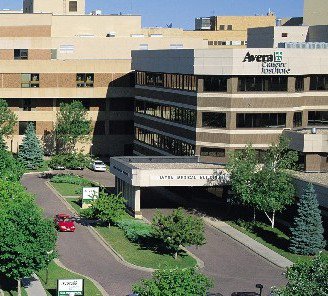
Yeah! That's right. I'm truly excited now. I'm going to start my first medically related job ever, and guess what? I landed one in the ER in the largest hospital in Sioux Falls! Amazing. Being a volunteer employee 12 hours a week in the busiest, most critical part of the hospital will certainly give me valuable experience, as well as a chance to be part of and observing the adrenaline pumping life-and-death traumas that take place there. Seeing doctors and nurses in action, helping them out in any way I legally can, is going to be so fantastically fascinating I can hardly wait. I am prepared though, and I should be, for the many horrifying, blood-gushing, gut-wrenching situations that are bound to take place in a place like that (where else?), and I understand that this job will be very different physically and mentally from the front desk receptionist position I was first offered. Cool, though, and important, in that I get a pointer on my future ability and wish to tackle such situations.
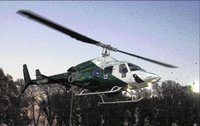
This Friday I went to the hospital to find out what jobs were available to me, and before my meeting I had a few minutes to spend. I went up on the top of the parking complex, and got a great view of the whole hospital campus. Then, about a 100 feet from where I was standing, on a different hospital roof, a medical helicopter started up its engines. Slowly and steadily it started to take off, and then flew right over where I was standing and off into the horizon. A great way to start your day at a hospital.
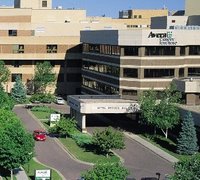
I know, and have always known (even though I like the drama anyways) that the tv-show ER is fictional in many ways, but I have always believed that reality can beat whatever clever tv-writers can make up.
Avera McKennan hospital, here I come, and let's hope I like it.
Labels: Medical, News
Location: Changed
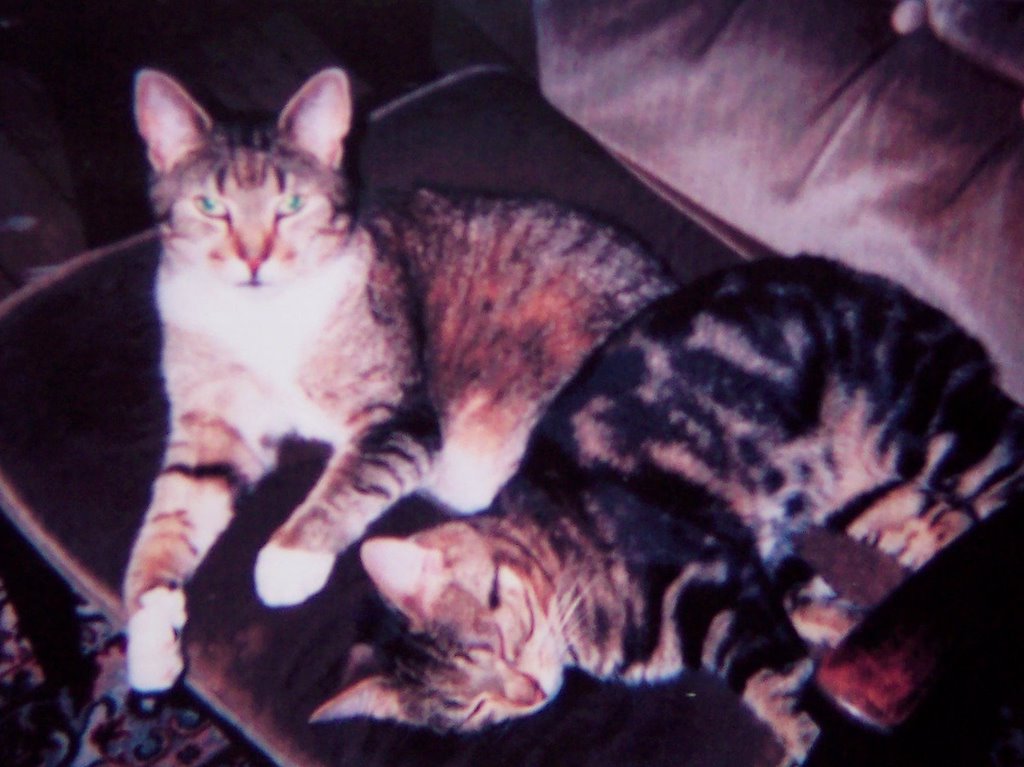
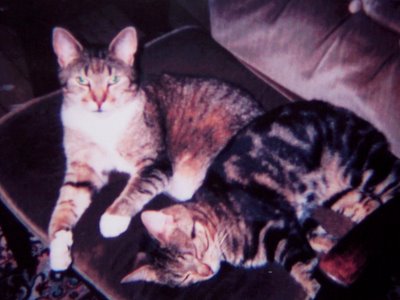
[WISH LIST FOR CHRISTIAN'S BIRTHDAY: CLICK HERE!]I moved. Finally. I moved to my friend Landon's former room, and I love it. It might be just across the hall from where I temporarily lived the past 12 days (remember: "my penthouse"), but it feels like it's in a totally different building. The room's actually square, the ceiling's barely slanting, and it's of course bigger. But that's not the only thing on my mind these days, I have occasional periods where I can't stop thinking about my cat, H.M. King Farouk I, so I thought I'd post the first picture of him in the history of the blog, right now, while I keep thinking about and missing him.
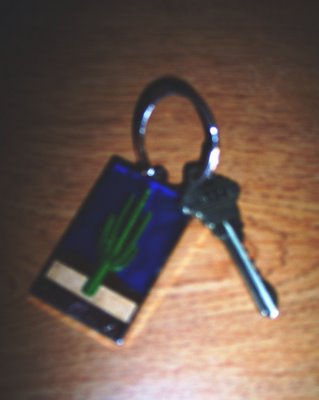 Here are my new keys, which obviously go together with my new room.
Just thought that'd be symbolic in a way.
 Behold, it's... new.
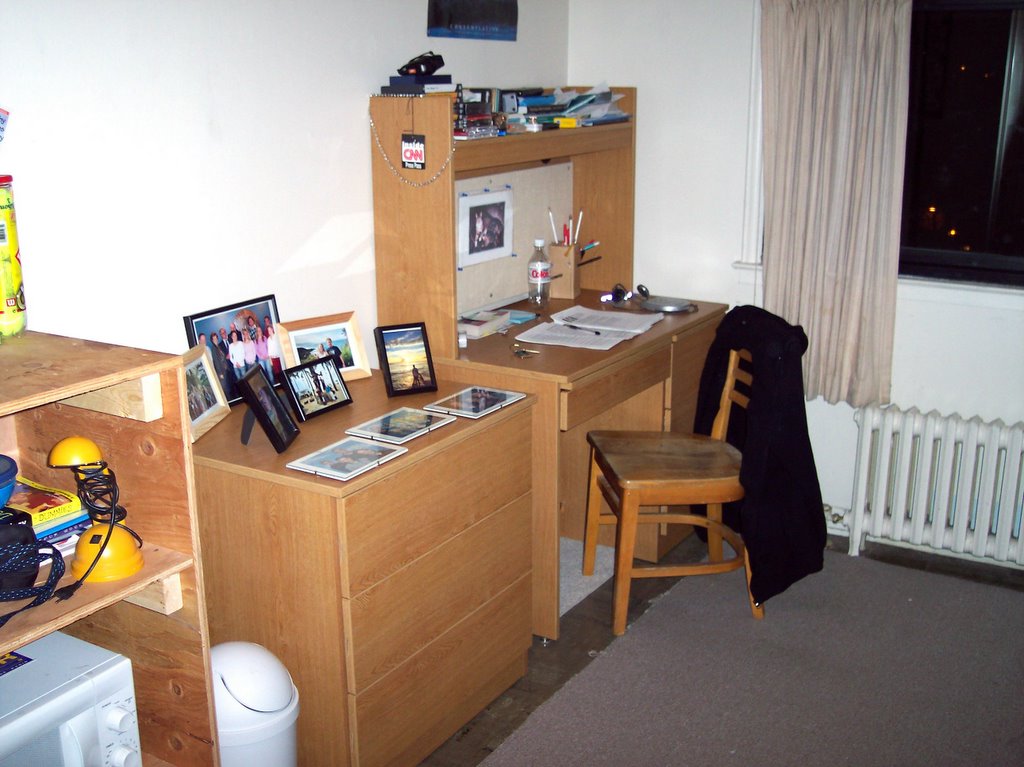
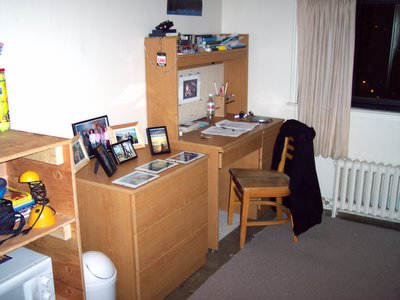 This is the left side of the room, featuring my desk and the picture display.
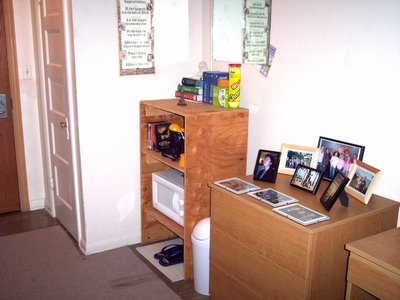 Same side of the room as the last one, but featuring my bookcase and microwave.
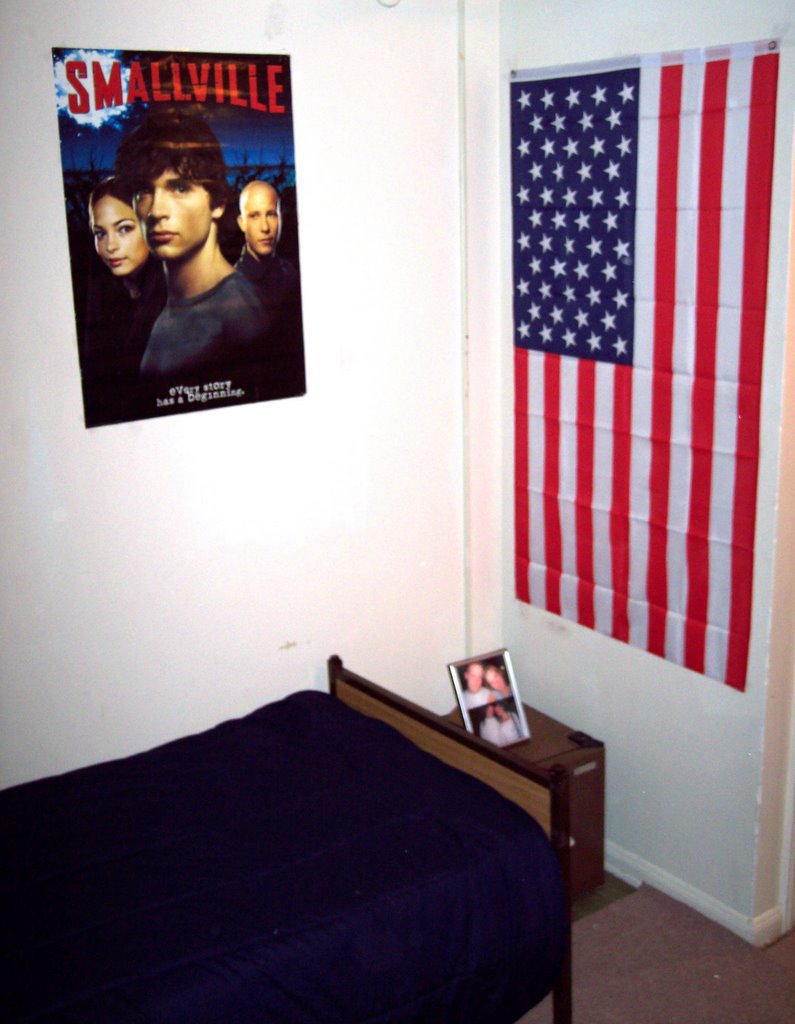
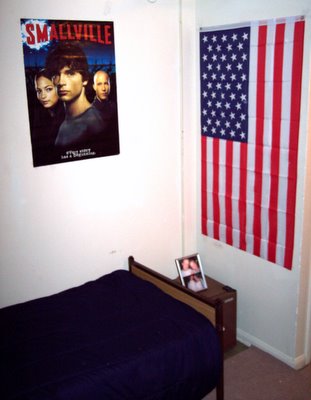 The right side of my room, featuring my fridge, bed, Smallville poster and a flag. Now, I'm not exactly an American patriot, so don't worry - the flag's just decoration.
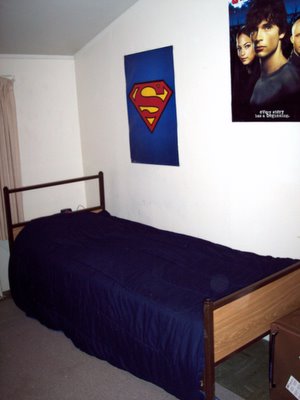 My bed, Smallville and Superman posters, and the end table (hard to see) with the alarm clock (important), phone and answering machine.
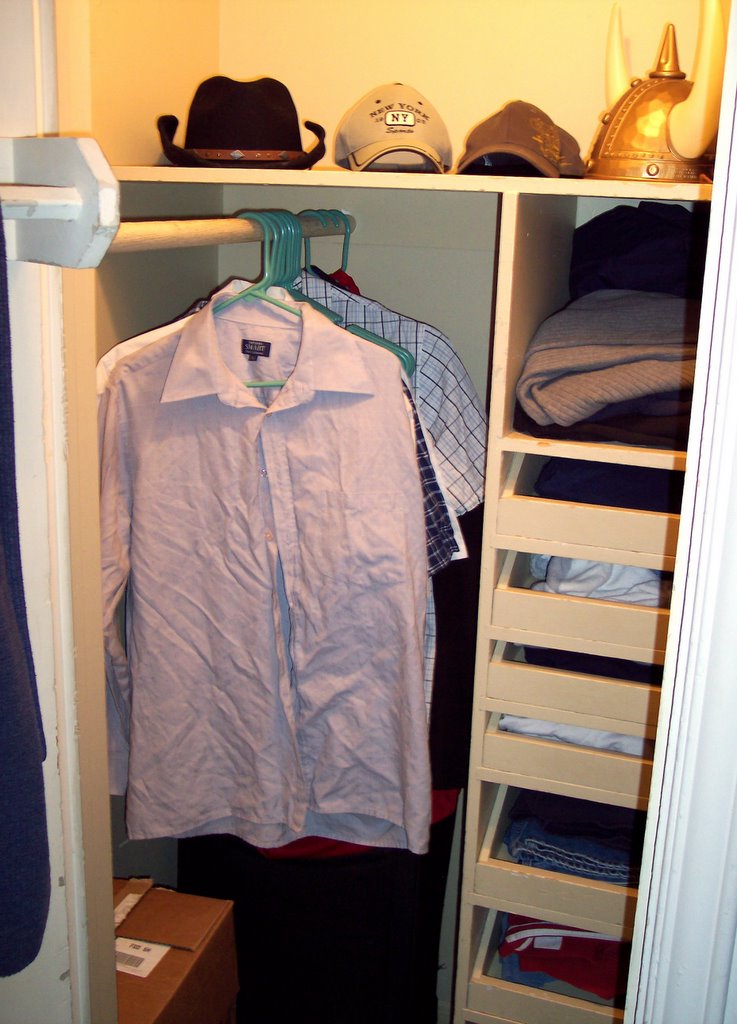
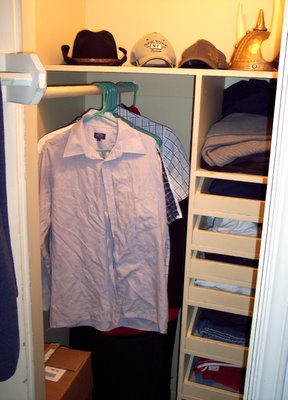 My fantastic walk-in closet, with my fascinating array of hats, and of course (almost) all my clothes.
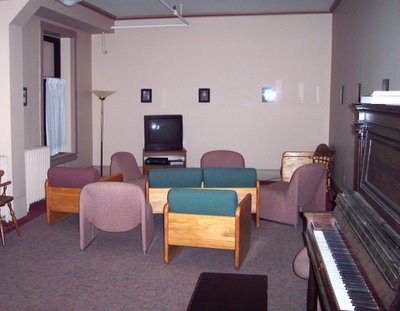 The East Hall TV room, or my new living room, seeing as I don't have a TV, and this room has a DVD player and a VCR as well.
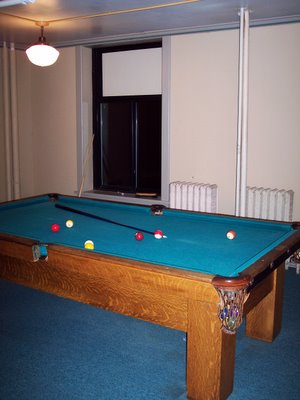 The pool room in East, somewhat old but fully useable. And we do.
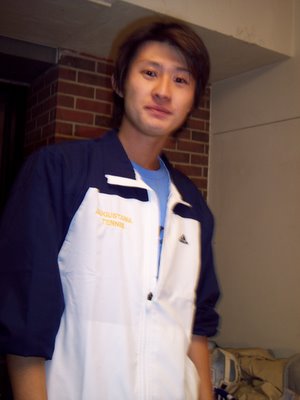 My Japanese friend, Kei, who's a devoted tennis player.
That concludes this week's picture exclusive, straight from the prairie land of South Dakota.
Labels: College Stuff, Medical, Minor Updates, News, Pictures
 I recently completed my mandatory rotation in the McKennan ER, where I usually volunteer, during which time I had the chance to sit down with patients in a different way than I usually do. One of the patients I got to talk to was a 22 year old guy, who had come in for a diffuse set of symptoms, including a headache and stomach pain. What I got to talking to him about, though, had little to do with his current ailments, and more to do with the kind of society we have become.
  This gave me a few things to think about, a few things to ponder if you will. The first part is the obvious one, whether or not doctors are doing too little to actually treat their patients with psychological afflictions. I think they absolutely are, and I think that the way pills are being pushed so naturally as the 'magic' solution to all our problems nowadays is borderline disgusting, and all the way saddening. The lack of appreciation for the complexity of our minds, beyond the basic and chemical, seems all too prevalent, and the easy way out of solving problems in this intricate cognitive organ we know as our brain. It is very true that the symptom of depression (or the symptom causing depression) is due to a chemical imbalance in the brain, but thanks to growing patient lists and increased time pressure docs usually don't have the time to dig much deeper than this. They opt for the easy way out, the quick fix, and parcel out pill after pill as if they were fantastic Tic-Tacs.